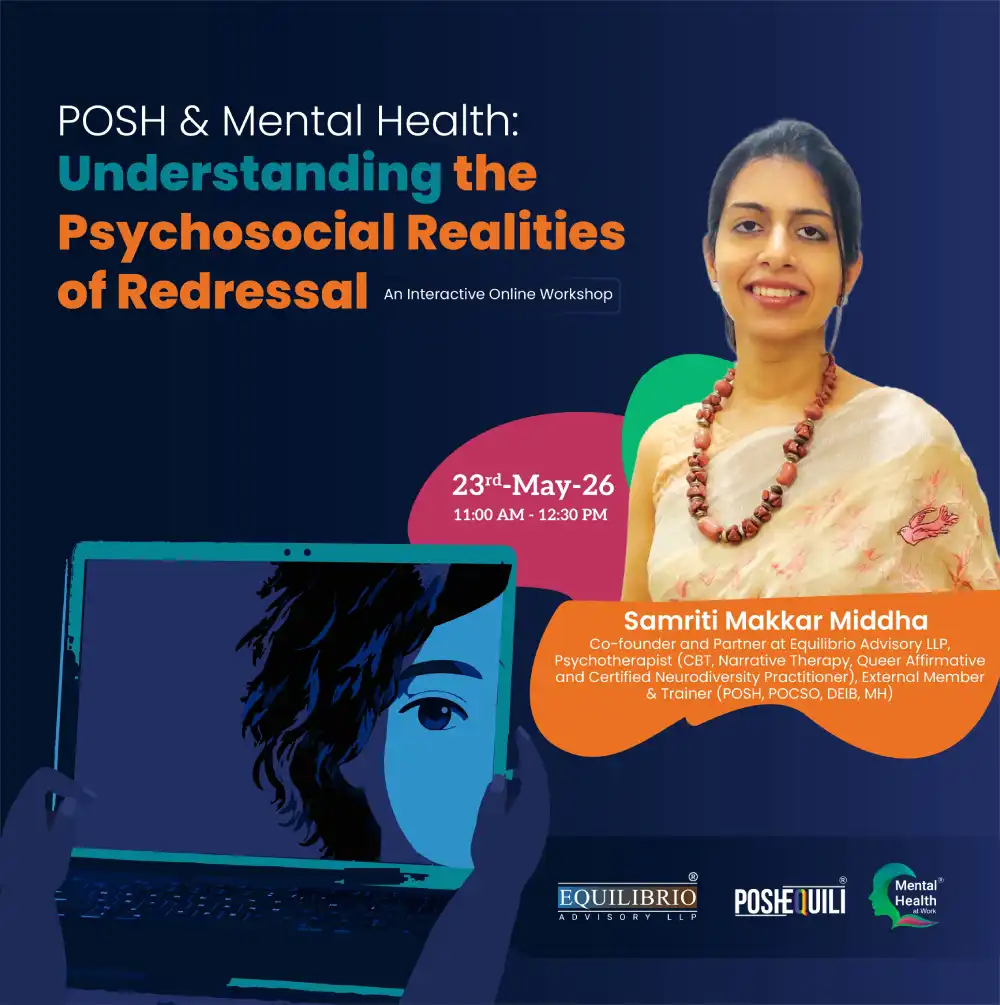
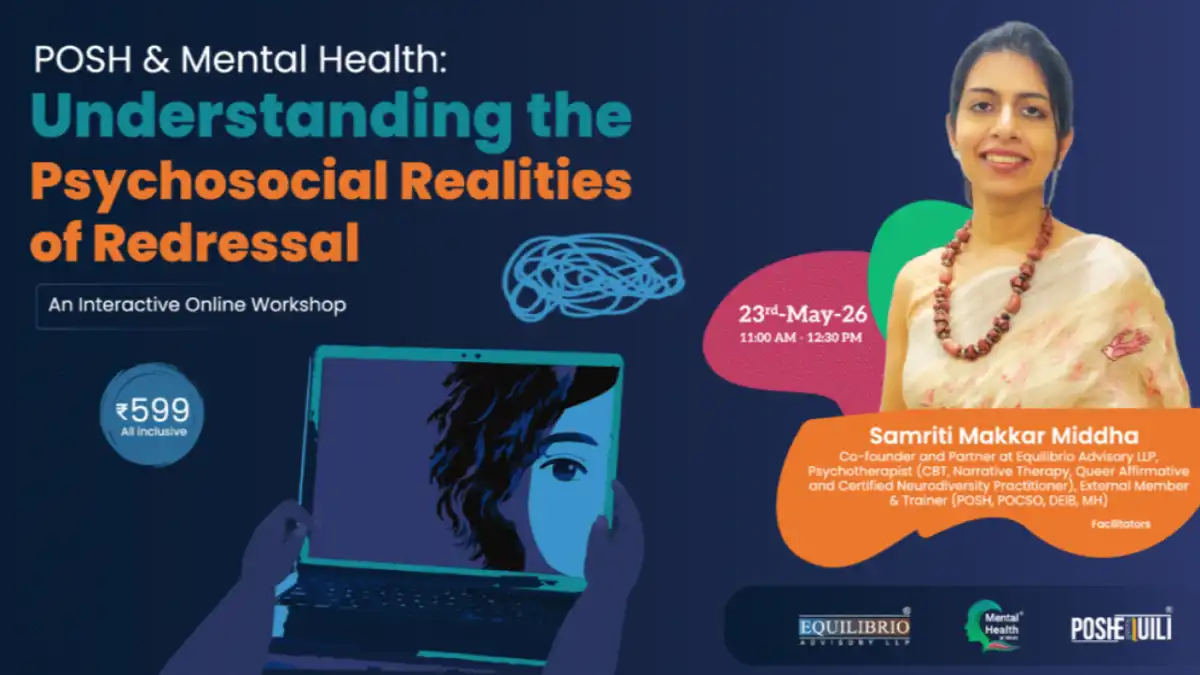
The Sexual Harassment of Women at Workplace (Prevention, Prohibition and Redressal) Act, 2013 provides a critical legal framework for addressing workplace sexual harassment. However, the experience of sexual harassment and the process of redressal are not purely legal, they are deeply psychosocial in nature.
At POSHequili, our work recognises that incidents of sexual harassment, as well as experiences of genuine distress, can have significant emotional, psychological, and social impact, not only on the aggrieved person, but also on respondents, witnesses, and Internal Committee (IC) members.
Further, organisational practices, informal cultures, and social conditioning can shape how individuals perceive, report, and engage with the redressal process, often impacting mental wellbeing at every stage.
This conversation brings together law and mental health, moving beyond compliance to understand the human experience within POSH processes.
Key Themes & Discussion Areas
1. Understanding Impact Beyond the Incident
👉 Emotional and psychological impact of sexual harassment
👉 Experiences of genuine distress and overwhelm in workplace interactions
👉 Trauma, self-doubt, and internalised narratives
👉 Impact on professional identity, safety, and belonging
2. The Psychosocial Journey of Redressal
👉 Barriers to reporting (fear, stigma, victim blaming, power dynamics)
👉 The emotional experience of filing a complaint
👉 Re-traumatisation, isolation, and workplace responses during inquiry
3. Stakeholders & Mental Health
👉 Complaints filed by / against persons experiencing mental illness
👉 Experiences of distress: Complainants, respondents, and witnesses
👉 Vicarious trauma and decision fatigue among IC members
👉 Role of managers and first responders in shaping experience
4. Role of Organisational Culture
👉 Social conditioning, bias, and casual sexism
👉 Informal workplace behaviour and its impact on perceived safety
👉 Importance of trust, transparency, and visible support systems
5. Moving Towards Supportive Systems
👉 Building empathetic and trauma informed redressal processes
👉 Responding to both sexual harassment and distress with sensitivity and clarity
👉 Integrating mental health support (EAPs, referrals, safe conversations)
👉 Role of training in shifting attitudes and enabling access to redressal
6. Understanding mental health implications for IC members
👉 Navigating high stakes situations
👉 Recognising and responding to intense emotions: Guilt, Anxiety & Distress
👉 Impact of bias
👉 Systems of support
This will be a highly interactive, discussion led session, drawing from:
👉 Real life case reflections
👉 Case studies
👉 Participant experiences
👉 The session will create a safe and reflective space for participants to engage with both legal and human dimensions of POSH.
Who is this for?
👉 Internal Committee (IC) Members
👉 POSH POCs or Convenors to IC
👉 ER / HR Professionals and Managers
👉 POSH Trainers and Facilitators
👉 External Members on Internal Committee
👉 Mental Health professionals working with adults, Organizational psychologists, EAP consultants
👉 Students studying law, psychology, gender studies
Outcome
Participants will leave with:
👉 A deeper, more nuanced understanding of POSH beyond compliance
👉 Enhanced ability to navigate sexual harassment concerns and distress with empathy and clarity
👉 Practical insights to strengthen workplace redressal systems
👉 Awareness of the mental health implications of workplace processes
Closing Note
Creating safe workplaces requires more than policy, it requires awareness, sensitivity, and intentional action. This session invites participants to rethink redressal not just as a process, but as an experience, one that can either harm or heal.