Case Name: Sumit Kumar v. Union of India & Ors.
Factual Background
Sumit Kumar, a CISF Constable, sought leave in 2017 to care for his wife following pregnancy complications, a miscarriage and major surgery. After further leave was sought, he submitted a conditional resignation while under mental stress. He was charged with failing to appear before the Commandant on 6 December 2017 and allegedly pressuring the administration; circulating a video of his wife and using relatives to intimidate officers; and having five earlier minor penalties for unrelated service lapses.
All charges were found proved and Kumar was removed on 1 May 2018. The appellate and revisional authorities and the Delhi High Court upheld the penalty, relying partly on his past service record. He appealed to the Supreme Court.
Court’s Analysis
The Supreme Court reiterated that judicial review is limited, but courts may intervene for breach of natural justice or statutory rules, unsupported findings, an unreasonable conclusion, or punishment so disproportionate that it shocks the conscience.
On Charge I, no written direction or reliable contemporaneous evidence established that Kumar had been instructed to appear before the Commandant. Deliberate disobedience could not rest on an unsupported allegation; his wife’s serious condition and the circumstances of the leave request were relevant to assessing his resignation.
On Charge II, there was no satisfactory evidence that Kumar circulated the video or instigated relatives to threaten officers. The video came from another mobile number; he could not be held responsible merely because it concerned his wife or callers claimed to be his relatives.
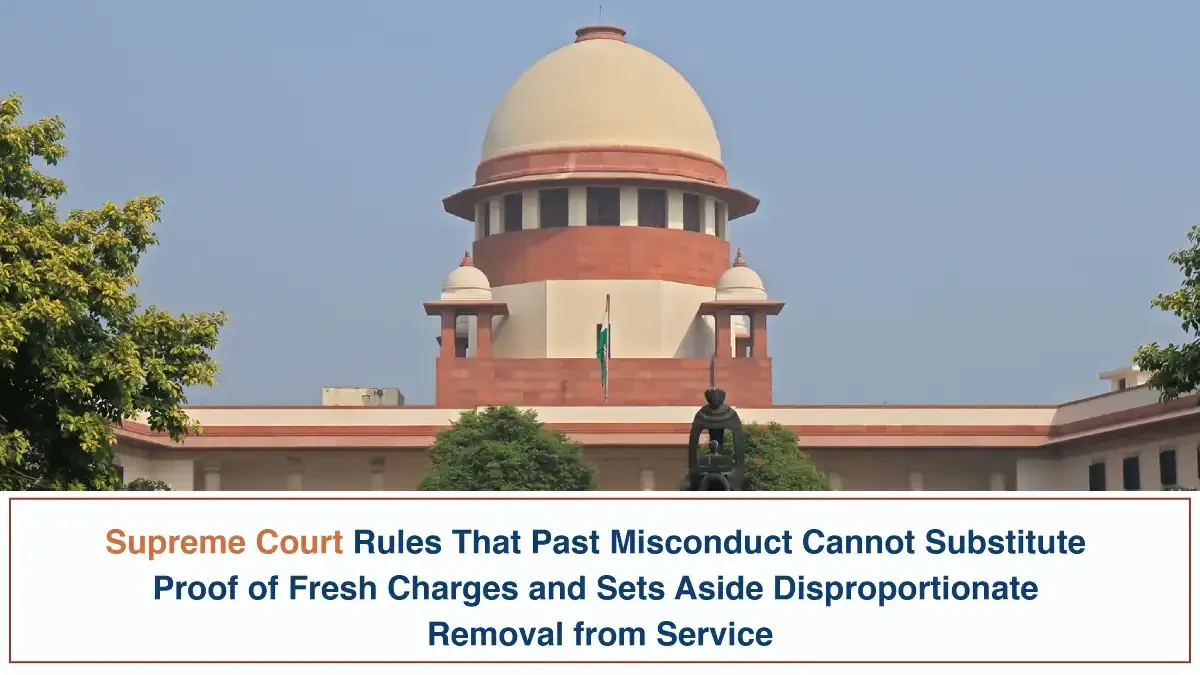
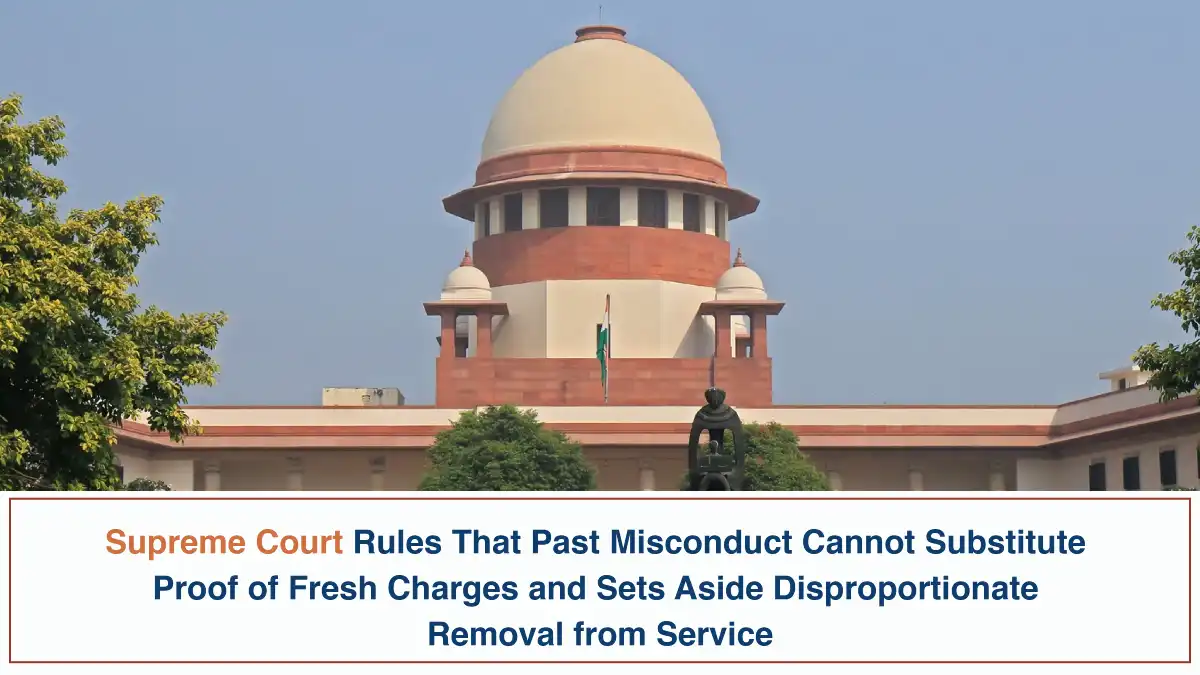
On Charge III, the Court clarified the relevance of past misconduct. Earlier penalties cannot themselves be treated as fresh misconduct or used to fill gaps in proof of current charges. A past service record may, where the applicable rules permit, inform the choice of punishment for a subsequent misconduct that has been independently proved. Here, the five minor penalties
related to separate past incidents and did not establish any independent misconduct in the proceedings.
The Court also found that Hindi translations of relied-upon documents were supplied only after prosecution evidence had closed, despite Kumar’s difficulty with English. His request for a defence assistant was also refused, contrary to Rule 36(8)(a) of the CISF Rules, 2001, depriving him of an effective opportunity to defend himself.
Considering the circumstances surrounding the resignation and the absence of sufficient evidence establishing the principal charges, the Court held that the extreme penalty of removal was manifestly excessive and disproportionate.
Order of the Court
The Supreme Court allowed the appeals, set aside the Delhi High Court’s judgments and quashed the removal order along with the appellate and revisional orders. Considering the passage of time, it declined to remit the matter for a fresh inquiry. Kumar was directed to be reinstated forthwith with consequential benefits and 50% back wages from removal until reinstatement.
Key Takeaway
Past penalties may be considered when deciding punishment for a later, independently established misconduct, but cannot be recycled as fresh charges or used to prove new allegations. Each charge must be supported by evidence, and the employee must receive a meaningful opportunity to defend, including timely access to relied-upon documents and appropriate defence assistance. Punishment must be proportionate to the misconduct actually proved.