Case Name: AX v. Union of India & Ors.
Factual Background
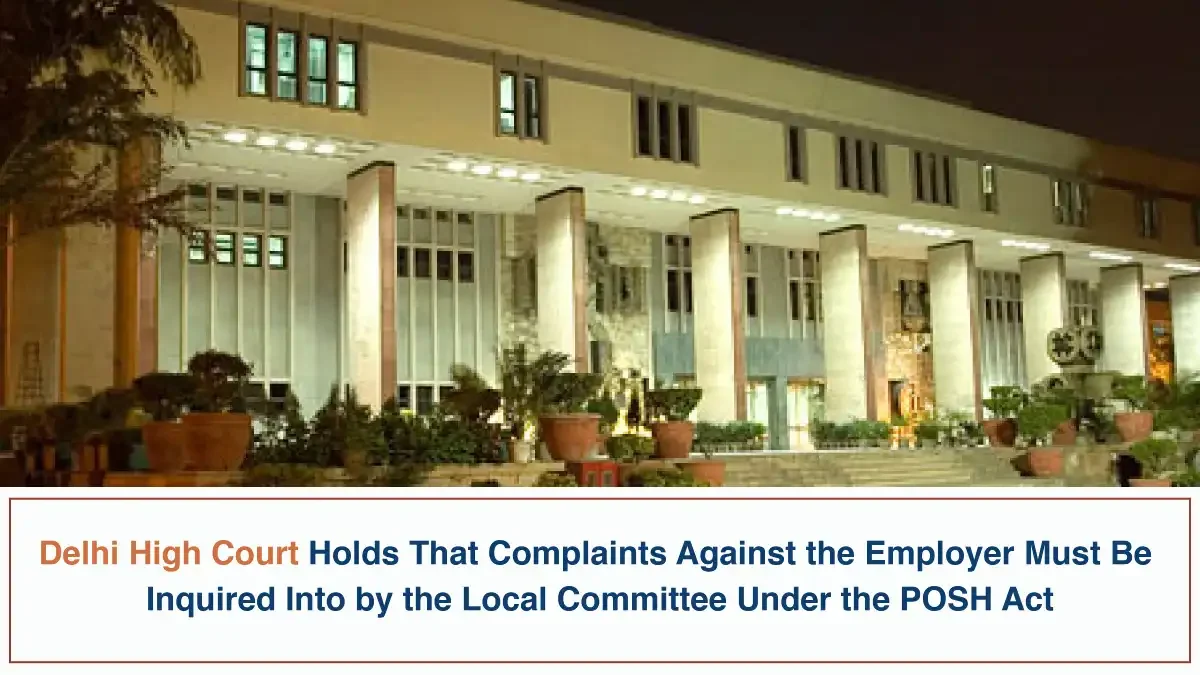
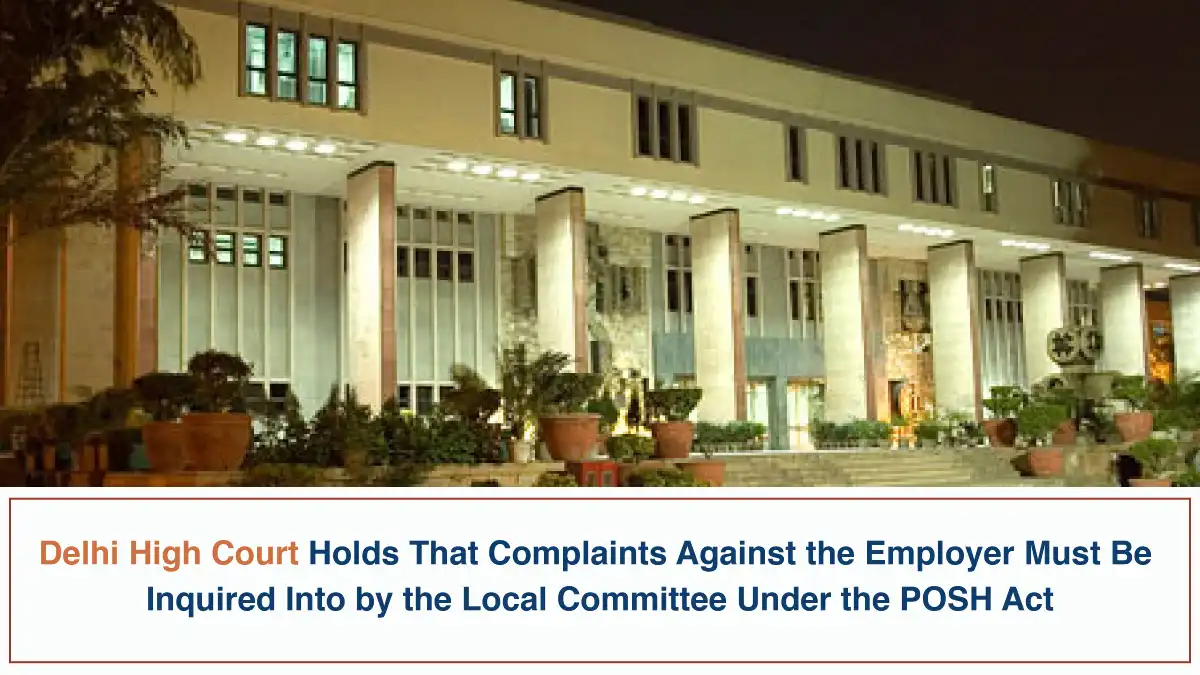
The Delhi High Court heard connected writ petitions arising from a Research Assistant’s sexual-harassment complaint dated 9 February 2015 against TERI’s then Director General. TERI’s Internal Complaints Committee (ICC) submitted an adverse report on 19 May 2015. The respondent’s appeal was rejected by the Industrial Tribunal on 3 July 2023. The complainant sought action under the Sexual Harassment of Women at Workplace (Prevention, Prohibition and Redressal) Act, 2013 (“POSH Act”) and protection against victimisation. After the respondent died in 2020, his legal representatives challenged the ICC report and Tribunal decision.
Court’s Analysis
The principal issue was whether the ICC had jurisdiction to inquire into a complaint against TERI’s Director General. The legal representatives argued that he was the “employer” under Section 2(g), being the head of the organisation and responsible for its management and control. Section 6(1) provides that a complaint against the employer himself must be received by the Local Committee constituted by the District Officer, not the establishment’s Internal Committee.
The Court accepted the objection. As Director General, the respondent fell within Section 2(g), so the complaint belonged before the Local Committee. The ICC lacked jurisdiction. This defect went to the root of the inquiry and was not cured by the respondent’s failure to object earlier or by the Tribunal’s subsequent scrutiny.
The Court also considered the non-supply of witness statements and denial of an opportunity to cross-examine. Referring to Avinash Mishra v. Union of India, it clarified that cross-examination is not an absolute right in every POSH inquiry. However, where adverse findings rely on witness statements or documents, the person proceeded against must receive the material and a meaningful opportunity to answer it. The procedure may be adapted to protect complainants and witnesses, but natural justice still requires disclosure of relied-upon material
and a real opportunity to rebut it. Referring to Avinash Mishra, the Court noted that a modified process may balance both interests, including cross-examination through a defence assistant or by a written questionnaire where appropriate.
The Court further clarified that although the standard of proof in POSH proceedings is not proof beyond reasonable doubt, fairness requires that the person facing allegations be given an effective opportunity to defend themselves.
Order of the Court
The Court set aside the ICC report dated 19 May 2015 and the Industrial Tribunal’s order dated 3 July 2023. It remitted the complaint to the competent Local Committee for independent consideration of the complaint and available material, in accordance with natural justice and the POSH Act. The Local Committee must consider the effect of the respondent’s death on the maintainability and feasibility of further proceedings. The complainant’s original writ petition was treated as infructuous in light of subsequent developments; both petitions were disposed of.
Key Takeaway
A complaint against the employer, as defined under Section 2(g) of the POSH Act, falls within the Local Committee’s jurisdiction under Section 6(1), not the organisation’s ICC. This jurisdictional defect cannot be waived or cured by appellate review. Even though cross-examination is not invariably mandatory, disclosure of relied-upon material and a meaningful opportunity to respond remain essential to a fair POSH inquiry.